
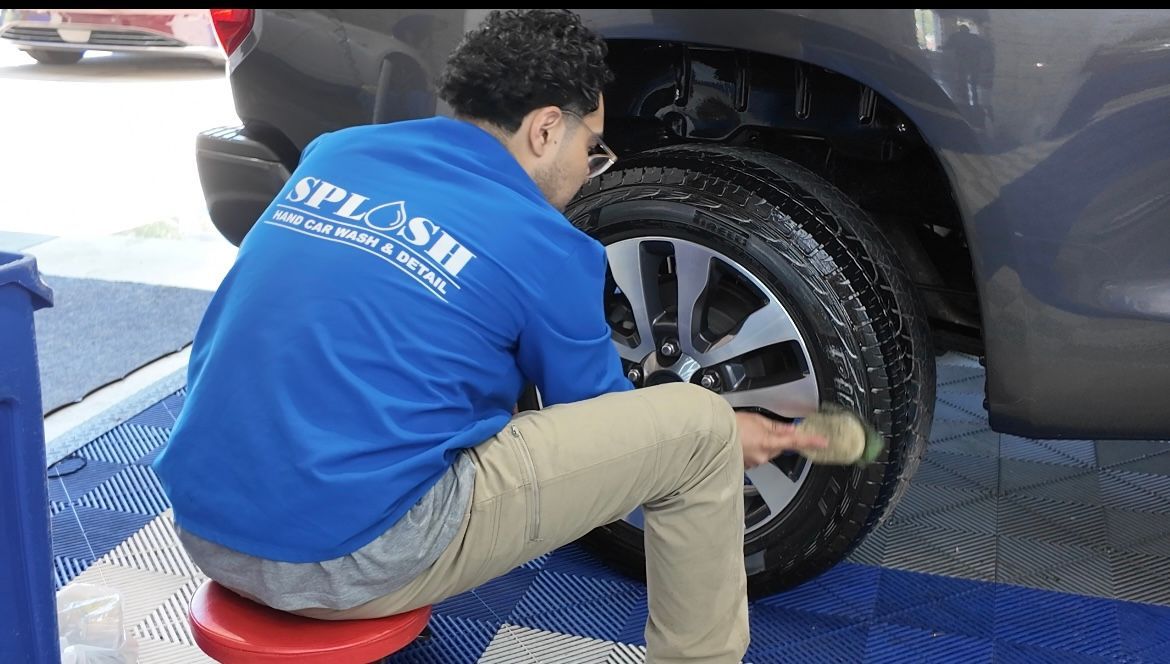
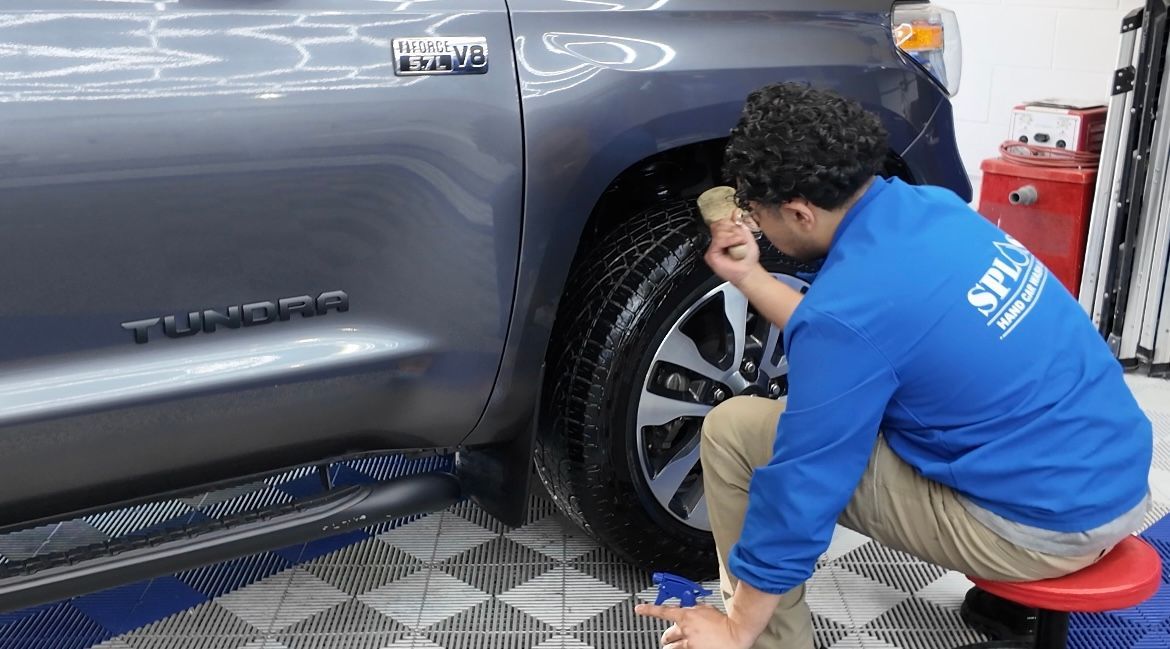
Wheels tend to look worse than the rest of the car. You rinse the body, stand back, and the rims still look flat or speckled. Much of that grime traces back to brake dust, which is a big reason drivers in Libertyville and Northbrook start asking about professional wheel cleaning.
Brake dust behaves differently from ordinary road dirt. It is produced by the parts that slow your car, and it gradually bonds to the wheel surface. Left alone, it can dry out, harden, and combine with other grime. So a rim can seem fine at a glance yet feel gritty to the touch.
In the sections below, we cover what brake dust is, why wheels attract so much of it, and why buildup gets harder to lift over time. We also look at why aggressive scrubbing can backfire, and what wheel and tire work includes at Splash Hand Car Wash and Detail.
What Brake Dust Actually Is
Knowing the material helps explain why it sticks.
Brake dust is the fine residue that brake components shed while they wear during routine stops. Every slowdown releases a little more. Most of it drifts onto the nearest surface, which is usually the wheel. It shows up as a dark, dusty film that often goes unnoticed until you look at the wheel face in bright sunlight.
A few traits make it worth paying attention to:
- It accumulates through ordinary commuting, not just sudden braking.
- It works into the wheel face and collects in recesses.
- Moisture and road grime can combine with it and make it tackier.
Why Wheels Collect So Much of It
Their position on the car puts wheels in the path of the dust.
Because wheels sit so close to the brakes, they are usually the first surface the dust reaches. Spoke openings, deep wells, and intricate designs offer many spots where it can lodge. Wet pavement, spring rain, and winter road salt add more debris into the mix, and once everything blends together, it grips the finish more tightly than loose dirt would.
Several factors explain why wheels stay dirtier than other areas:
- Their proximity to the braking hardware.
- Detailed spoke patterns that trap residue in corners.
- Road film and moisture that help the residue hold on.
Why Buildup Gets Harder to Remove Over Time
Fresh residue is far easier to lift than residue that has baked on.
Shortly after it lands, a thin layer may come off during a standard rinse. Given enough weeks, though, that same layer can cure onto the wheel, grow thicker, and pick up contaminants along the way. The result is a film that resists ordinary washing. Pushing harder at that stage raises the odds of leaving marks behind.
Typical signs that buildup has outlasted a simple rinse:
- A gritty texture even after the wheel is washed.
- A dim or cloudy look across the wheel face.
- Residue that reappears soon after a cleaning.
What Professional Wheel Cleaning Includes at Splash
Wheel and tire work appears across several of Splash's washing and detailing options.
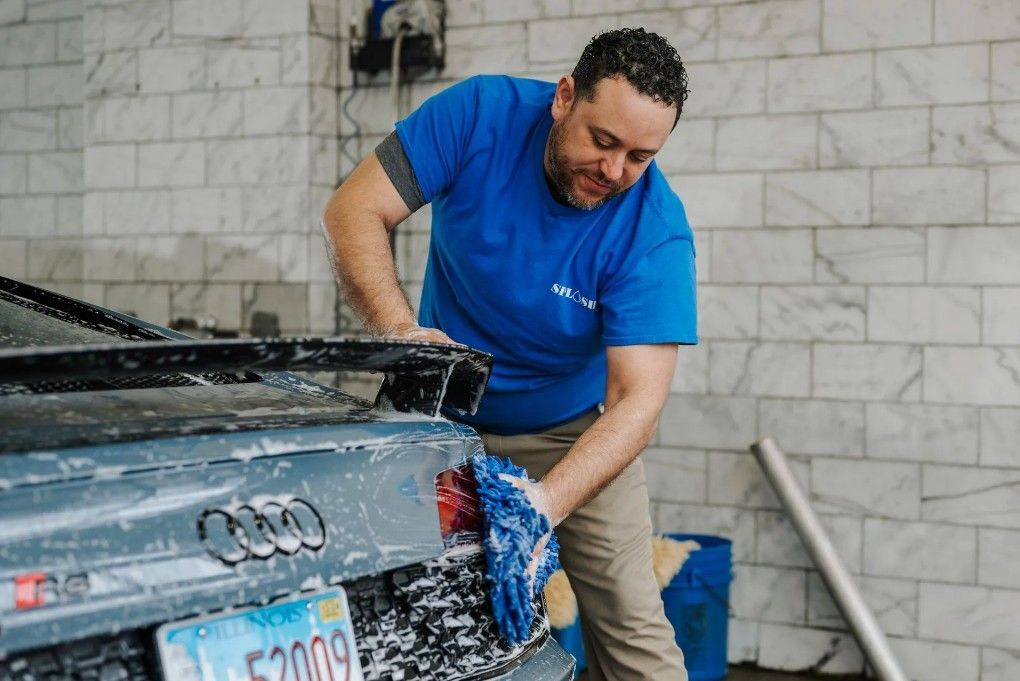
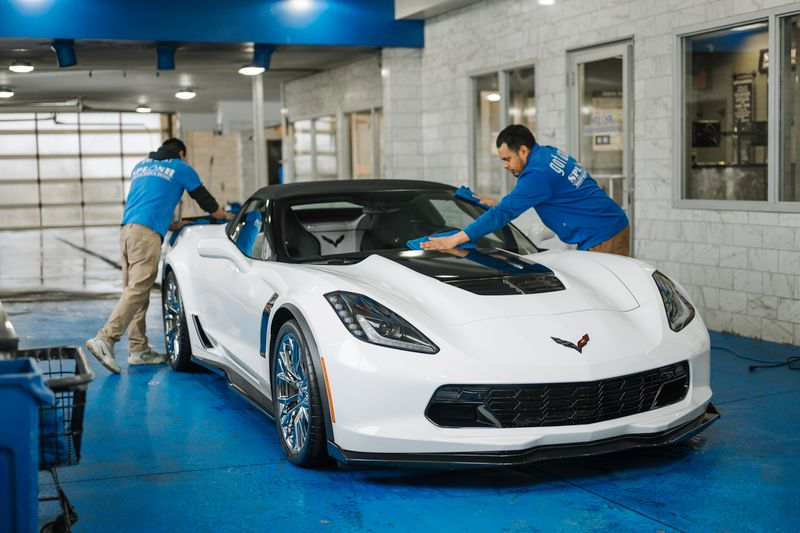
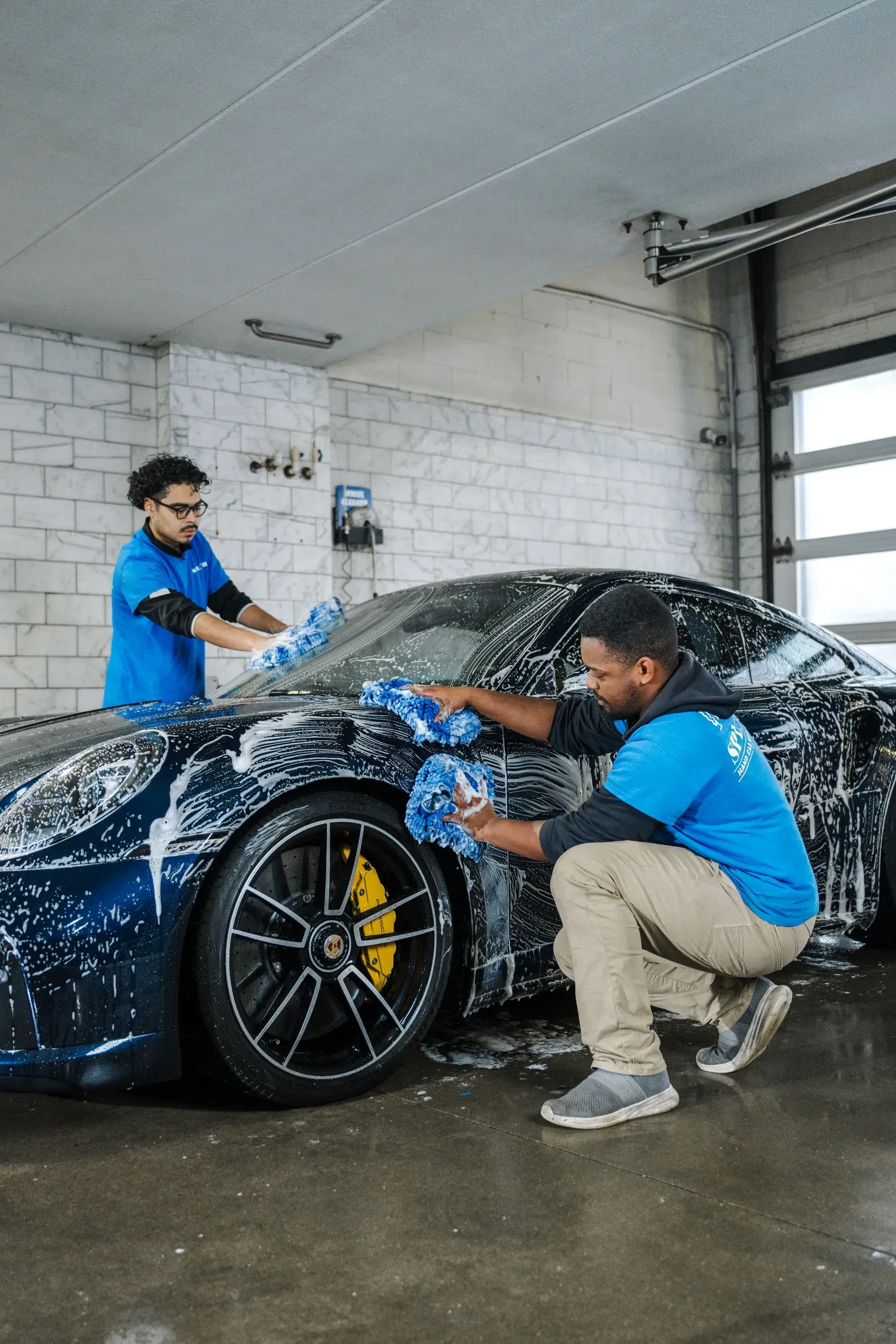
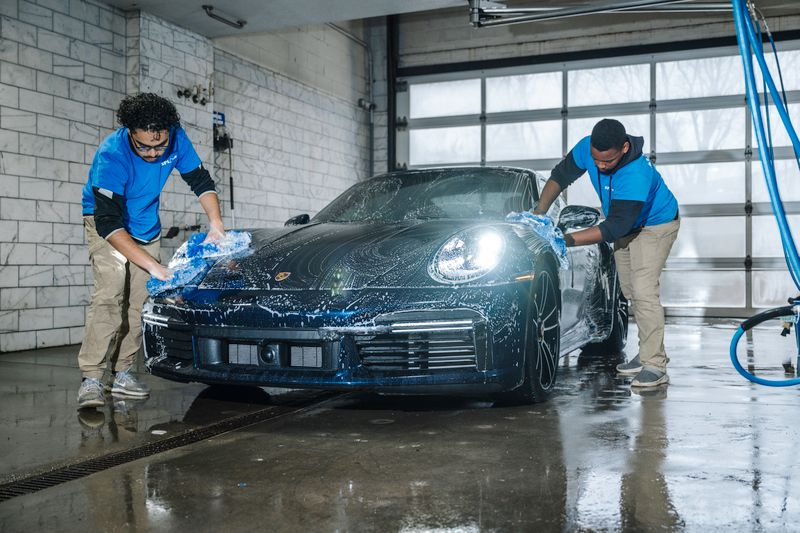
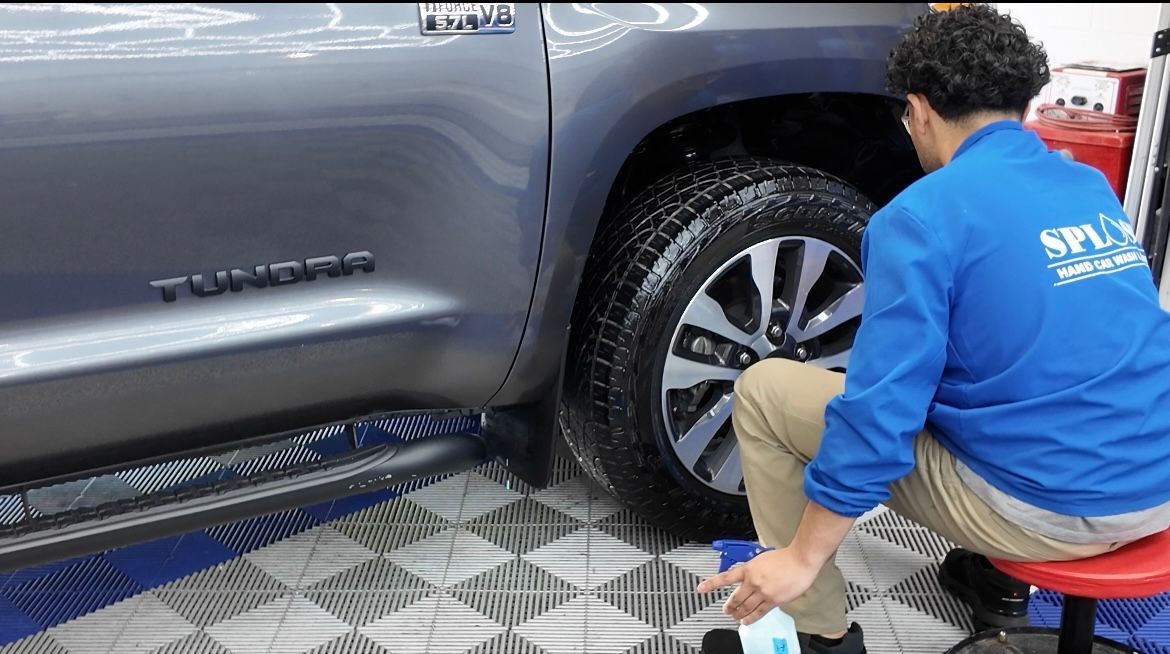
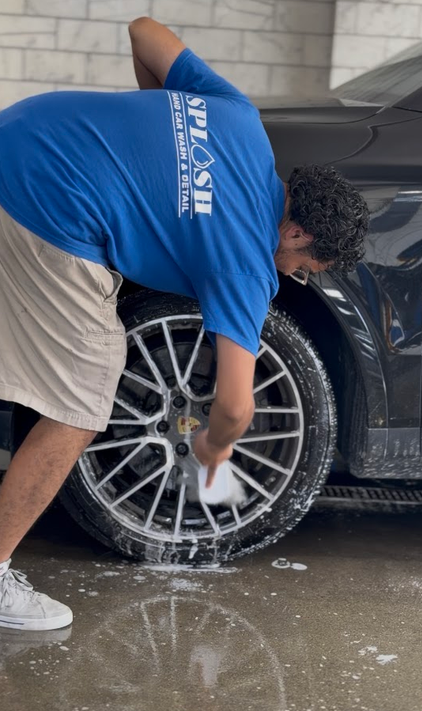
Every hand car wash package at Splash cleans the wheels and tires by hand. Depending on the tier, the rims are cleaned too, and certain packages add a tire dressing as a finishing step. The hand wash avoids harsh chemicals and machines, and every wash is hand dried.
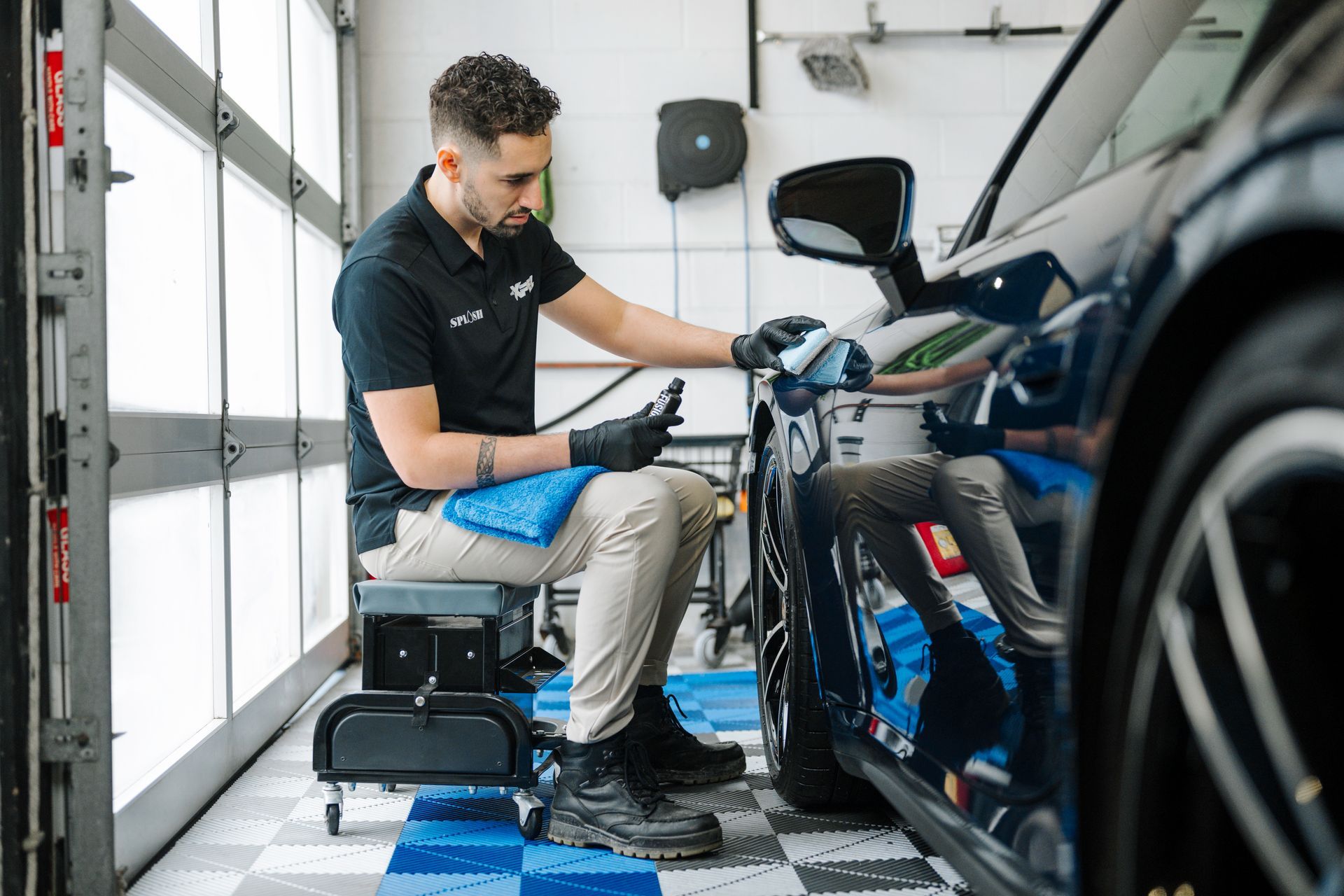
Exterior detailing adds a deeper layer of attention. Those packages also cover the wheels and tires, with a no-sling tire dressing included. Which option fits depends on how much residue has built up.
Splash also offers a wheel coating within its ceramic coating packages. The page describes that coating as protection for wheels against road grime, which makes it worth discussing when you plan your wheel care.
Why Harsh Scrubbing Can Hurt Wheel Finishes
Extra force does not automatically produce a cleaner result, and it can introduce new problems.
Wheel finishes are often more delicate than they appear. A rough pad or stiff brush worked hard across the surface can leave marring, fine swirl marks, and patches that look hazy. Those flaws can make the wheel look worn even after the residue is gone.
Harsh products create their own risk. A cleaner that does not suit the finish may leave a film or dull the surface. Which method works best depends on the material, how thick the residue has become, and how long it has stayed put.
Typical damage from rough handling includes:
- Marring caused by abrasive pads or stiff bristles.
- Swirl patterns left by circular scrubbing.
- Cloudiness from a product that was not meant for the finish.
Where Wheel Care Fits in Your Routine
Wheels make the most sense as one piece of a complete plan.
Splash's detailing vs car wash guide makes a clear distinction. A car wash covers routine cleaning, while detailing reaches areas that traditional washes miss. Detailing and washing do different jobs.
Many drivers find that
professional wheel cleaning and periodic detailing work well together. Wheels, paint, and the interior each need different attention, so a mix often makes sense.
Plan Your Next Wheel Cleaning With Splash
Unsure what your rims need? Start with a short conversation.
Wheel condition, the way you drive, and the buildup you notice all influence the right service. Contact Splash Hand Car Wash and Detail to talk through what suits your vehicle and the buildup you see.
Frequently Asked Questions
Where does brake dust come from?
Brake dust is the fine residue that comes off brake components as they wear during everyday driving. It forms with every slowdown, not only during hard stops. The wheels take most of it because they sit closest to the braking hardware. The film often looks dark and dusty, and it can be easy to miss until you inspect the wheel face in good light. Since it forms steadily, routine attention keeps it from turning into a heavier job.
Why does grime return to wheels so soon after cleaning?
Brake residue and road grime often land together, and once they blend, they grip the surface harder. Open spokes and recessed areas give residue extra spots to cling, so wiping only the front face may leave some behind. Wet pavement and road salt can speed up the process, particularly during colder months when the roads stay treated.
Does professional wheel cleaning include the tires?
Yes. Splash's hand car wash packages cover the wheels and tires, and some tiers also clean the rims and apply a tire dressing. The exterior detailing packages include a no-sling tire dressing as well. Because each package lists different steps, review the package details or ask the team which one fits your car.
Does a wheel coating stop brake dust?
Splash describes its wheel coating as protection against road grime. It is best seen as an added layer of protection rather than a stand-in for cleaning. Wheels still benefit from regular care, and the crew can explain which option makes sense for your vehicle.
Can harsh scrubbing damage wheel finishes?
It can. Rough pads, stiff bristles, and circular scrubbing may leave marring, swirl patterns, or hazy spots on certain finishes. Products that do not suit the surface may also dull it. A gentler approach, matched to the finish and the amount of buildup, tends to preserve the wheel's appearance better over the long run.